
Sound On

The Family Who Kept the Magic
Byblos Saint-Tropez.
%20%C2%A9%20Rue%20des%20archives_web_jpg.jpg)
Jean-Prosper Gay-Para sold Byblos on September 19, 1967 — less than four months after opening night. The buyer was Sylvain Floirat. Six decades of ownership later, the original details are still there — maintained, not replaced. Ceramicists, ironworkers, weavers: the artisans who built it by hand are the reason it still feels like itself. The Floirat family understood what they had purchased — a time capsule worth adding to.
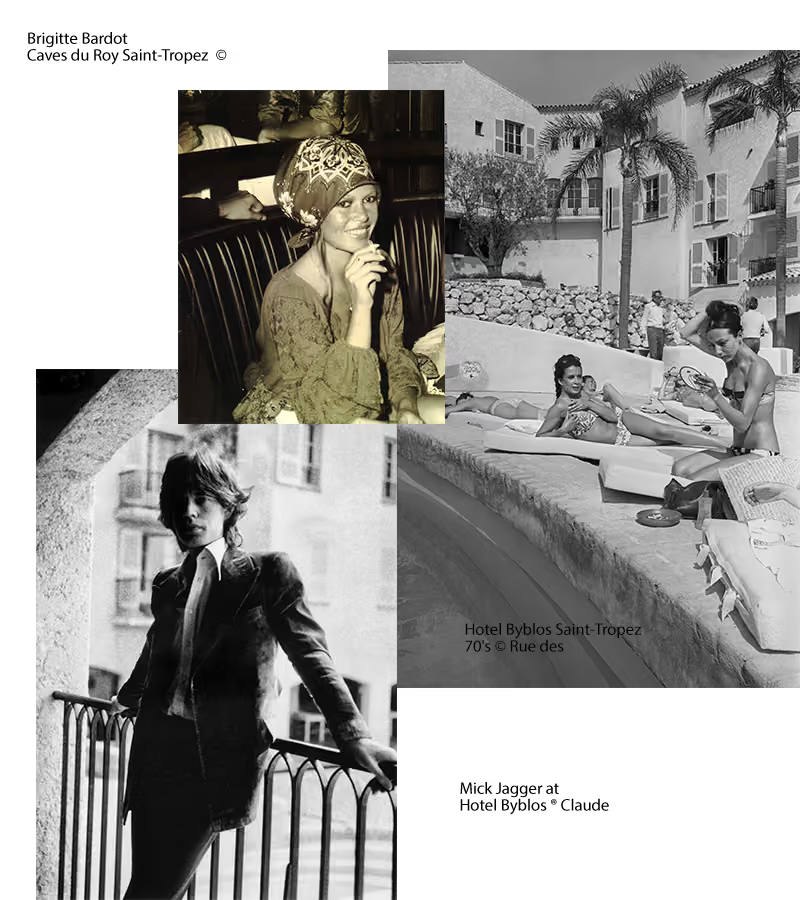
By the early 1970s Byblos had become a second address for a particular kind of person — artists, musicians, figures from the French cultural world who valued a place that didn't announce itself. The pool terrace was where the days happened. Unhurried. The stone already worn smooth, the palms already tall. The kind of place you returned to because nowhere else felt quite like it.

web.jpg)
The days at Byblos move through a considered sequence of spaces. The B. Lounge sits poolside — cocktails from noon, the light shifting across the stone terrace through the afternoon. As the sun drops, the Sky Bar opens the rooftop — Saint-Tropez laid out below, the Var hills behind it, that hour between day and night belonging entirely to the view. Come evening, Il Giardino takes over beneath the poolside pergola: executive chef Nicola Canuti's Italian kitchen, fed daily by the hotel's own permaculture garden — over seventy varieties of fruit, vegetables and aromatic flowers grown a stone's throw from the hotel. The garden drives the menu. And when the night is ready, Les Caves du Roy is already waiting — oriental decor, illuminated palm trees, a dancefloor that has held Elton John, Grace Jones and Leonardo DiCaprio. The kind of room that has never needed to explain itself.

Every surface at Byblos carries the hand of someone who knew their material. Ceramics fired in the workshops of nearby towns. Ironwork shaped for these specific corridors. Fabrics woven for these rooms and no others. Even the spa holds a room built from 17th-century marquetry panels transported from a palace in Beirut. It is this craft, layered into every corner, that makes Byblos the Muse