
Sound On

The Ceramicist from Vallauris
Roger Capron

Roger Capron arrived in Vallauris in 1946 and never really left. He took over an abandoned pottery, founded his workshop and spent the next six decades making things — tiles, vessels, surfaces, furniture — that ended up in some of the most considered interiors in the south of France. Two years after Capron arrived, Picasso turned his own hand to ceramics in the same town. The two worked in parallel, each putting Vallauris on the map in their own way. Capron's motto, inherited from his master René Gabriel, was simple: to make beauty accessible to everyone.
In the early 1960s, architect Philippe Sicardon entrusted Capron with the ceramic decorations for a new hotel being built in Saint-Tropez. The brief went beyond decorative surfaces. The dance floor of Les Caves du Roy presented a specific problem — standard ceramic tile would not survive the weight and friction of hundreds of people dancing on it night after night. Capron's solution was grand feu sandstone: ceramics fired at extremely high temperatures, harder and more durable than anything that had come before it in this context. High-fire ceramics had existed, but applying that process to a dance floor was a genuine technical innovation. He didn't just decorate the building. He solved it.
.jpg)
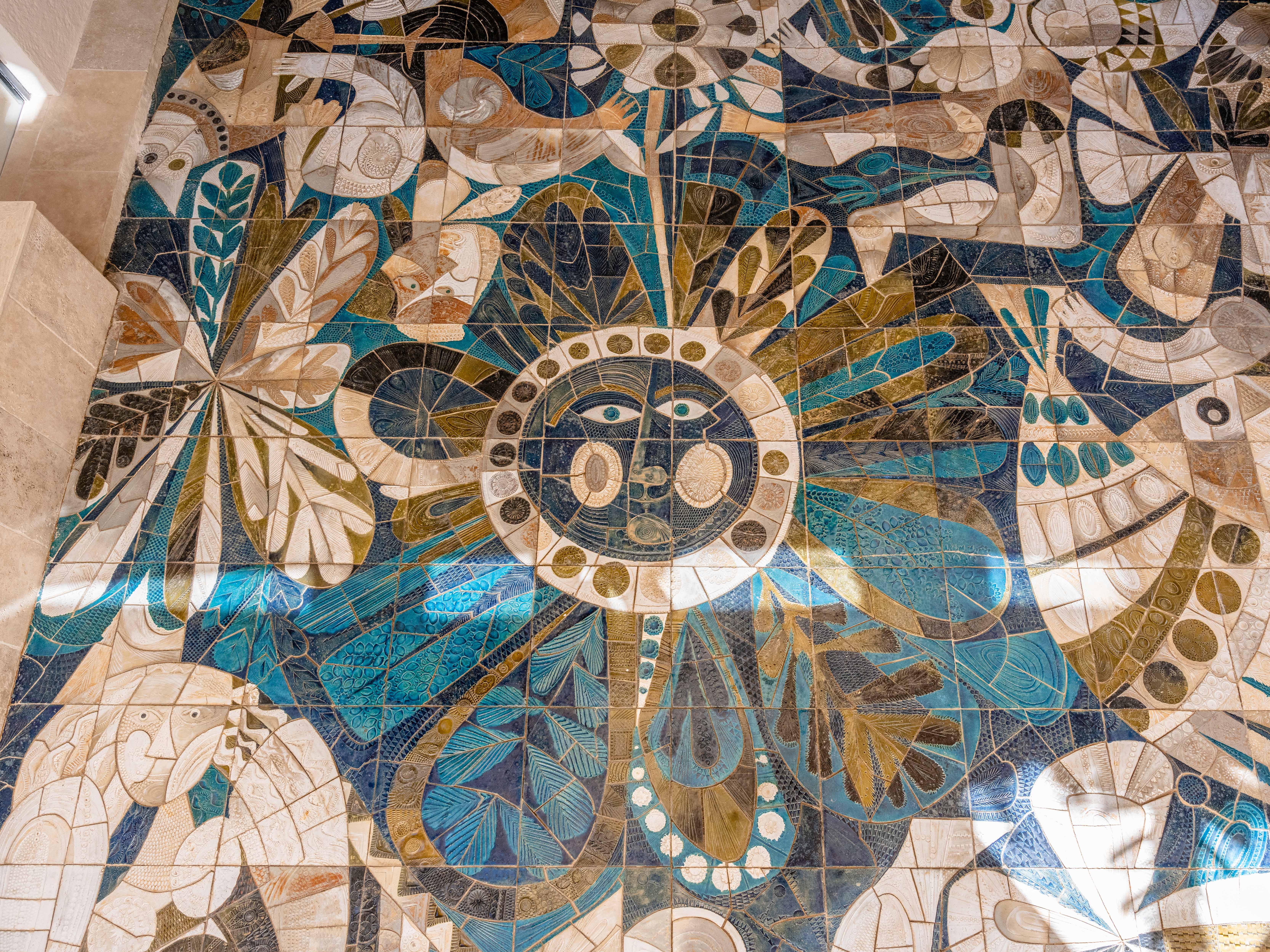
These are not decorative gestures. They are architectural decisions made in ceramic — surfaces designed to hold the weight of daily life, of decades, of thousands of people passing through. The warmth of that yellow. The depth of that blue. The technical resolve behind every piece. This is what draws designers and collectors to Capron's work, and what makes Byblos one of the most quietly remarkable interiors on the Côte d'Azur. His factory closed in 1982, which makes his original pieces genuinely rare.

Capron's factory closed in 1982 following an economic crisis, which makes his original pieces genuinely rare. 1stDibs remains one of the best sources for finding them — tiled coffee tables, vessels, wall plaques — and the market for his work has grown considerably as mid-century ceramics have been reappraised. His pieces now appear in major auction houses and design galleries internationally. The next maker we go looking for is Alain Vagh — we visited his studio and what we found there continues the conversation Capron started.